The average carbon footprint, and what one month looks like
“Carbon footprint” gets thrown around a lot, usually with big yearly numbers that are hard to picture. Let’s shrink it down to something you can actually think about: one month of ordinary life.

What a carbon footprint is
Your carbon footprint is the total amount of greenhouse gases linked to the way you live, usually expressed in tons of CO₂-equivalent. It includes the fuel you burn directly, like gas in the car, and the energy used to make and deliver what you buy, eat and use.
Nobody’s footprint is zero, and it isn’t meant to be a scorecard. It’s just a way of measuring something we can’t see.
The average, in plain numbers
Figures vary a bit depending on what’s counted, but roughly:
Divide the U.S. figure by twelve and you get a bit more than one ton a month. That’s a handy unit, because a single ton is something you can picture — and something you can do something about.
What does one ton look like?
At everyday temperature and pressure, a ton of CO₂ would fill a cube about 8.2 meters (27 feet) on each side. Taller than a two-story house.
Slide to see how your cubes stack up over a year. The house is to scale.
Where a typical month comes from
For most households, the footprint splits into four big areas. Exact shares depend on where you live and how you live, but the order is fairly consistent:
Getting around
Driving is usually the largest single slice for American households, simply because of the distances involved. Flights add a lot in the months you take them.
Home energy
Heating, cooling, hot water and electricity. Climate matters here: a Minnesota winter and an Arizona summer both take a lot of energy, just at different times of year.
Food
Food is a bigger share than many people expect, especially red meat and dairy, which take more land and energy to produce than most plant foods.
Everything else
Clothes, electronics, furniture, deliveries and services. Individually small, collectively significant.
None of this is about guilt. A warm house, a family dinner and a drive to see your parents are all good things. A footprint is just the sum of normal life.
Simple ways to trim your month
If you’d like to bring your number down, the easy wins are usually also money-savers:
- Combine errands into one trip and keep tires properly inflated.
- Seal drafts around doors and windows, and use a programmable thermostat.
- Switch to LED bulbs if you haven’t already.
- Eat what you buy. Food waste is wasted energy too.
- Buy fewer, better things that last longer.
- Repair before you replace, from shoes to bikes to appliances.
Small changes add up over twelve months, and most people find a few that fit their life without much effort.
Then cover what’s left
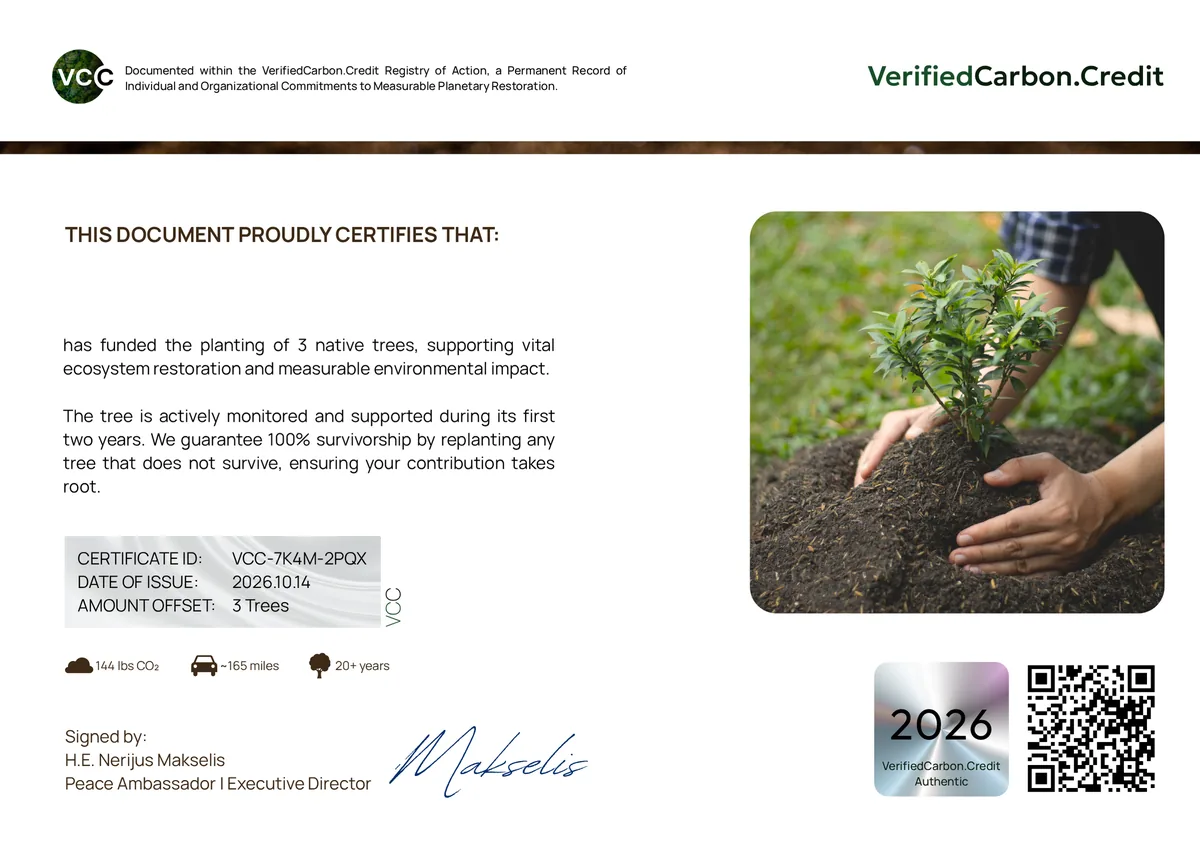
Even after trimming, there’s usually a remainder. That’s where a verified carbon credit comes in: one credit represents one ton of CO₂ kept out of the air, checked by an independent auditor and retired in your name so nobody else can claim it.
Our monthly offset does exactly that — one verified ton a month, with a certificate in your name that anyone can check. It’s a simple way to balance the month you just lived.
If you want to understand what makes a credit trustworthy, read how to tell if a carbon credit is the real thing.
Common questions
What is the average carbon footprint per person in the US?
Commonly cited estimates are around 14 to 16 tons of CO₂ per person per year, which works out to a little more than one ton a month.
What is the average carbon footprint worldwide?
Roughly 4 to 5 tons per person per year, with big differences between countries.
What makes up most of a household’s footprint?
For most American households: transportation, home energy, food, and the goods and services they buy — usually in roughly that order.
How can I offset one month of my footprint?
Reduce what you easily can, then cover the rest with one verified carbon credit (one ton of CO₂), retired in your name.

Your name